Visitors are often surprised by how little of the Third Reich is obviously marked in Berlin. There's no grand "WWII museum" at the centre of it all, and many of the most significant sites are unmarked on purpose. That's a deliberate choice by a country still working out how to remember without glorifying. Once you know what you're looking at, though, the twelve years of Nazi rule are written all over the city centre — often hiding in plain sight. These are the places I take people to, and what they actually mean.
The Reichstag and the fire that changed everything
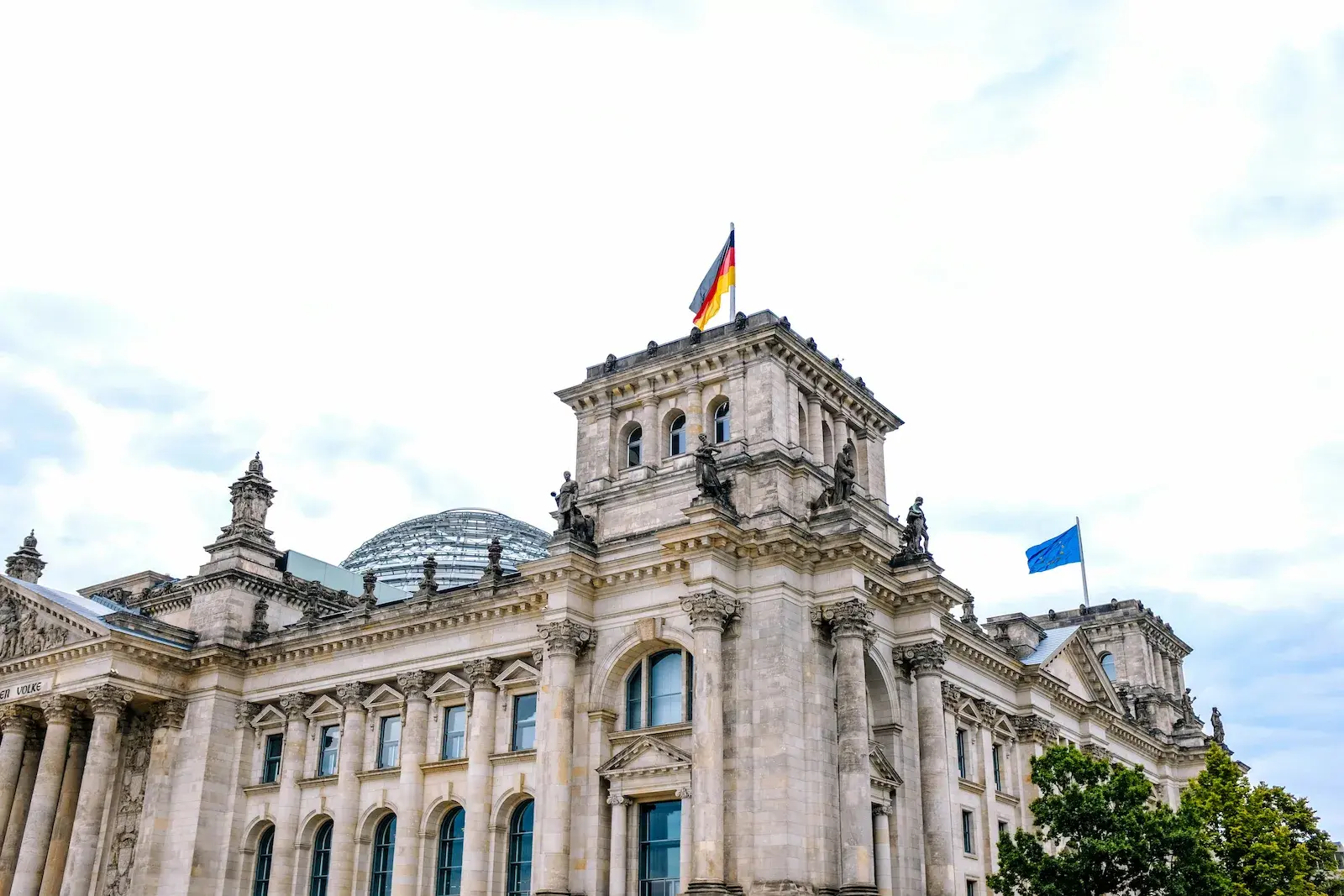
The Reichstag is where the story turns. On the night of 27 February 1933, less than a month after Hitler became chancellor, the parliament building burned. The Nazis blamed the communists and used the fire to push through the emergency decree that suspended civil liberties — the legal hinge on which the dictatorship swung open. A detail most visitors miss: the Nazis barely used the Reichstag afterwards. Parliament, such as it was, moved to the Kroll Opera House across the square, where in 1933 it voted itself out of existence.
Topography of Terror — the heart of the apparatus
If one site explains how the regime worked, it's the Topography of Terror, built on the ground where the Gestapo and SS headquarters once stood on the former Prinz-Albrecht-Straße. This was the command centre of Nazi persecution — the desks from which terror was administered across a continent. The exhibition is free, unflinching, and essential. Right outside runs that surviving stretch of the Berlin Wall, so two dictatorships meet on a single pavement.
The Führerbunker — an unmarked car park
A few streets away, an ordinary residential car park sits above the remains of the Führerbunker, where Hitler killed himself on 30 April 1945. There is deliberately almost nothing here — one modest information board, added only in 2006. The city refuses to let the spot become a shrine, and I think that's exactly right. Standing on the tarmac while I explain what lies beneath tends to land harder than any monument.
Wilhelmstraße — where the ministries still stand
Walk along Wilhelmstraße and you're on what was the government spine of Nazi Germany. Göring's colossal Reich Aviation Ministry survives almost intact — one of the largest surviving buildings of the era — and is still a working government office today, now the Federal Ministry of Finance. Its later life is its own history lesson: the GDR was founded in this building in 1949, and the 1953 uprising began at its doors.
Bebelplatz — the book burning
On Bebelplatz, in May 1933, students threw some 20,000 "un-German" books onto a bonfire. Micha Ullman's memorial is one of the quietest in Berlin — a glass plate set into the square, and beneath it a room of empty white shelves. Nearby, a line from the poet Heinrich Heine, written a century earlier: "Where they burn books, they will in the end also burn people."
Beyond the centre
- The 1936 Olympic Stadium in the west, built to showcase the regime — and the stage for Jesse Owens' four gold medals, which rather spoiled the script.
- Tempelhof Airport, a vast monument of Nazi architecture that later became the lifeline of the 1948–49 Berlin Airlift.
- Track 17 (Gleis 17) at Grunewald station, the platform from which more than 50,000 Berlin Jews were deported. Each edge is cast with a date, a number, and a destination.
- Sachsenhausen, the concentration camp just north of the city, built as a "model" camp and a training ground for the SS.
- The House of the Wannsee Conference, the lakeside villa where, in January 1942, officials coordinated the logistics of the "Final Solution" over lunch.
A word on how to visit
These are not sights to be rushed between. What holds them together is the sequence — how a modern democracy collapsed into dictatorship in a matter of months, and where that led. That arc is what my Third Reich tour follows on the ground, using the true story of one Berliner, pastor Martin Niemöller, as the thread from the Reichstag to the bunker. Come with questions; the whole point is to understand how it happened, not just where.
Related tour
Third Reich Tour
The era of National Socialism told through my grandfather's stories.