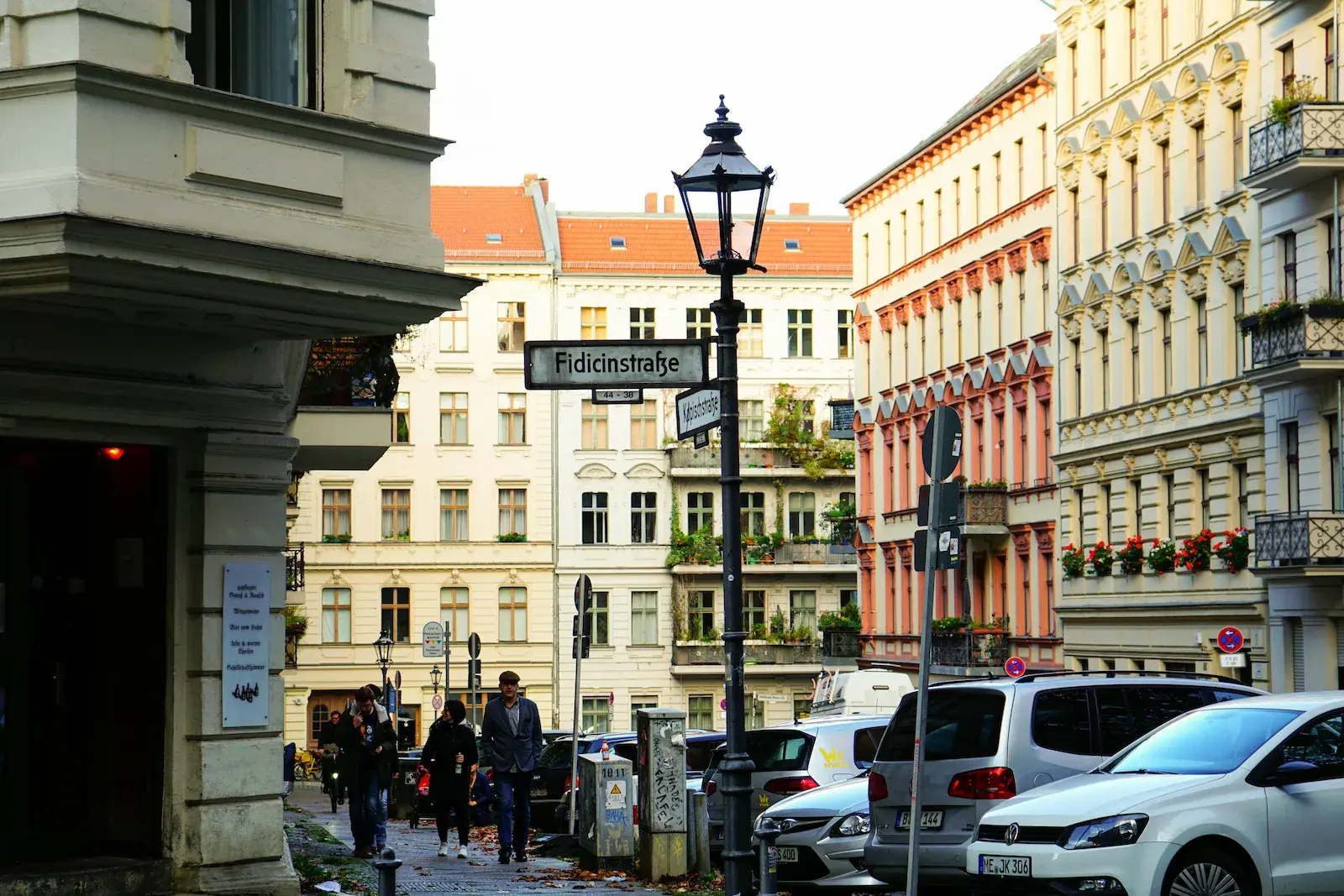
Kreuzberg is the Berlin that ends up on postcards for people who think they're too cool for postcards. It's scruffy, loud, political and genuinely one of the most interesting square miles in Europe — but its reputation has curdled into cliché lately, so let me tell you what's actually here and how it got this way.
First, the name
The district takes its name from a small hill in Viktoriapark — at 66 metres, one of the highest natural points in the inner city. On top stands a monument designed by Karl Friedrich Schinkel in 1821 to mark the wars against Napoleon, crowned with an iron cross, the Kreuz that gives the neighbourhood its name. Walk up on a clear evening for one of the best free views in Berlin, with a working vineyard on the slope below.
How Kreuzberg became "Kreuzberg"
For most of the 20th century this was a dense, poor, working-class quarter. Then the Berlin Wall went up in 1961 and bent around three sides of it, turning Kreuzberg into a walled-in dead end at the very edge of West Berlin. Rents collapsed, the authorities lost interest, and into that vacuum came two groups who defined the district: Turkish "guest workers", recruited from 1961 to rebuild the West German economy, and a wave of students, artists, draft-dodgers and punks drawn by cheap flats and the freedom of a forgotten corner.
Failed 1970s urban planning — the city wanted to bulldoze whole blocks — sparked a fierce squatting movement in the early 1980s. Empty buildings were occupied and turned into homes, cafés and art spaces. The old Bethanien hospital was saved this way; the tradition of protest that grew out of those years still surfaces every 1 May, when Kreuzberg holds its raucous, sometimes fractious, annual demonstrations and street festival.
Where to actually go
- Kottbusser Tor ("Kotti") — the chaotic, unpretty heart of the district. Not everyone's cup of tea, but it's the real thing.
- Oranienstraße — the main artery for bars, döner, record shops and late nights. This is SO36 country, named after the old postal code.
- Maybachufer — the Turkish market along the canal on Tuesdays and Fridays, piled with produce, cloth, olives and warm bread. My favourite ordinary pleasure in the city.
- Bergmannkiez — the gentler side of Kreuzberg, with the covered Marheineke market hall and quiet café-lined streets.
- Görlitzer Park — built on a former railway yard. Green, lived-in, and honest about the city's rougher edges.
- Oberbaumbrücke — the handsome brick bridge over the Spree, once a border crossing, now the link to Friedrichshain.
A few honest tips
Kreuzberg is safe but unpolished — this is not a manicured old town, and that's the point. Go hungry: the food here, especially the Turkish and Middle Eastern cooking, is some of the best value in Berlin. Come in the evening if you want the atmosphere, in the morning if you want the markets. And treat the neighbourhood as somewhere people live, not a theme park — the tension between its everyday life and its growing fame is part of what makes it worth understanding.
If you want the fuller story — the migration, the squats, the street art and the politics that still shape these streets — that's what my Kreuzberg tour is for. We start at Kottbusser Tor and wind through the corners the tour buses never reach, because the only way to really get this part of Berlin is on foot, with someone who's watched it change.
Related tour
Kreuzberg
Counter-culture, migration and alternative Berlin.